How Often Should You Service Your Refrigerated Vehicle? (And What It Costs If You Don’t)
November 24, 2026

There are two ways to pay for refrigerated vehicle servicing. One is on your terms, with a workshop visit booked at a time that suits your deliveries. The other is on the unit’s terms, when it gives out halfway through a run with a full load in the back.
The first option almost always works out cheaper. After more than 35 years building and servicing transport refrigeration at Tranzfreeze, our recommendation is simple: have each refrigerated van or truck serviced every 6 months, and make sure one of those visits falls ahead of the hot weather. Here’s why that routine pays for itself.
Key points
- Six months is the right interval between services, and sticking to it matters.
- Most refrigeration faults develop slowly, so regular checks catch them while they’re minor.
- A spring check-up prepares your unit for its toughest months of the year.
- Missing a service can cost you a full delivery of stock plus a large repair bill.
- Preventative maintenance lowers your running costs rather than adding to them.
How often should a refrigerated vehicle be serviced?
Twice a year. Many operators book in as often as every three months, so treat six months as the maximum gap, not a target to stretch.
Timing matters because refrigeration problems are gradual. A coil slowly clogs. A belt wears a little more each week. Temperatures start drifting by a degree or two. None of this stops a van or truck straight away, which makes it tempting to push the appointment back. Yet each month of delay gives a small issue more room to grow.
A fixed routine removes the guesswork. The vehicle is inspected on a predictable cycle, and you can plan the downtime around your quieter days.
What does preventative maintenance actually involve?
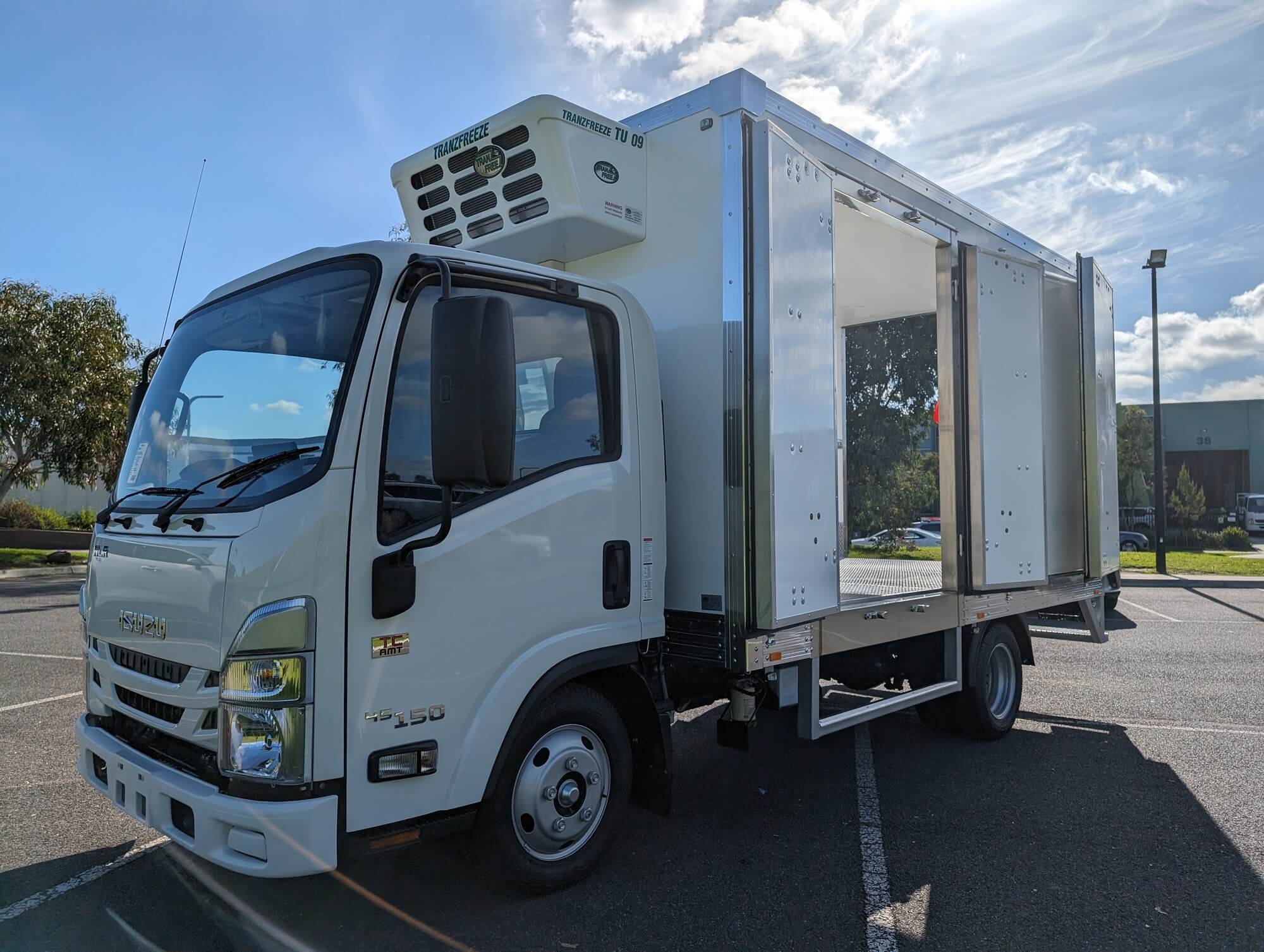
- Preventative maintenance is about identifying wear, contamination, and developing faults before cooling performance is affected. When a vehicle comes in, our technicians inspect, test, and service key refrigeration components, including:
- ✓ Condenser: Cleaned of dirt and debris to ensure efficient heat rejection and system performance.
- ✓ Refrigerant charge: Measured to confirm the system contains the correct refrigerant charge and is operating within specifications.
- ✓ Filter drier: Inspected and replaced as required to remove moisture and contaminants from the refrigeration circuit.
- ✓ Thermostatic Expansion Valve (TXV) filters: Inspected and cleaned to maintain proper refrigerant flow and system efficiency.
- ✓ Condenser and evaporator fans: Checked for correct operation, airflow, fan motor condition, and electrical integrity.
- ✓ Pressure switches and controls: Tested to verify correct cut-in and cut-out operation, helping protect the system from abnormal pressure conditions.
- ✓ Belts and hoses: Inspected for wear, cracking, fraying, or deterioration before failure occurs.
- ✓ Airflow: Assessed throughout the system to ensure there are no restrictions affecting cooling performance.
- ✓ Door seals: Examined to prevent warm air ingress and maintain cargo temperature.
- ✓ Electrical system: Tested for reliable voltage supply, secure connections, and proper operation of all refrigeration components.
- Regular preventative maintenance helps maximise efficiency, minimise breakdowns, extend component life, and ensure consistent temperature control, reducing the risk of costly downtime and product loss.
Drivers can play a part between visits too. Watch the condenser for visible grime, avoid parking with the unit hard up against a wall or another vehicle, confirm the doors shut fully, and limit how long they stay open on multi-drop routes. These habits apply equally to van refrigeration units running around the city and to a refrigerated truck body on larger jobs.
Why book in ahead of summer?
Winter is forgiving. With cool air outside, a unit carrying a dirty coil or a tired belt can still cope. Summer strips that margin away. On a hot day, the system works far harder to keep the load cold, and any component that was already struggling becomes much more likely to fail.
A spring service means clean coils, the correct refrigerant level, and fresh parts fitted while there’s room to plan. Taking a vehicle off the road for a scheduled appointment in October beats losing it on a scorching January afternoon.
What does it cost when you skip a service?
Product spoilage
Often the biggest loss is the cargo. If the unit can’t stay cold, an entire consignment of food, pharmaceuticals, or flowers can be written off in one trip. On top of the stock, there’s the missed drop-off and the dent to your customers’ confidence.
Avoidable repairs and replacement parts
An overdue system strains to do the same job, and that extra effort wears components faster, including the compressor. Swapping a tired part during routine maintenance costs a fraction of replacing major components after a breakdown. Emergency repairs also tend to strike at the worst moment, usually mid-shift.
Why refrigerated vehicle servicing is an investment, not an expense
It’s natural to see a service as money out the door. A better view is money spent now to avoid a far larger bill later. Each visit reduces the chance of a breakdown, protects what you carry, and extends the working life of your truck refrigeration units and vans.
Our systems are Australian-made and designed for local conditions, and our national service network keeps them on schedule wherever you operate.
To book your vehicle in, call our team on 03 9706 4951.

Frequently asked questions
1. Can I go longer than six months between services?
We don’t recommend it. Some fleets have their units looked at quarterly, and six months is the longest gap we’d suggest for reliable cooling.
2. When is the best time to book refrigeration maintenance?
While spring is often considered a good time to service a refrigeration unit before the hot weather arrives, we recommend servicing your unit based on its installation date rather than the season.
The first scheduled service should be completed 3 months after installation, followed by a 6-month service and then a 12-month service. After that, servicing should continue in accordance with the Tranzfreeze recommended maintenance schedule.
The best way to stay on track is to follow the service schedule outlined in your service booklet, or give us a call and we can confirm when your next service is due.
A well-maintained refrigeration unit has a significantly lower risk of breakdowns during hot weather and demanding operating conditions, helping to ensure reliable temperature control when you need it most.
3. What happens if a service is missed?
Minor issues like dirty coils, worn belts, or temperature drift worsen over time. Eventually, the unit may fail to stay cold, putting your stock at risk and leading to costlier repairs.
4. How do I know my unit needs attention between visits?
Look for slower cooling than usual, failure to reach the set temperature, unusual noises, or weaker performance than last summer. Any of these is a reason to call a technician.