Refrigerated Truck Bodies for Different Industries
November 16, 2026
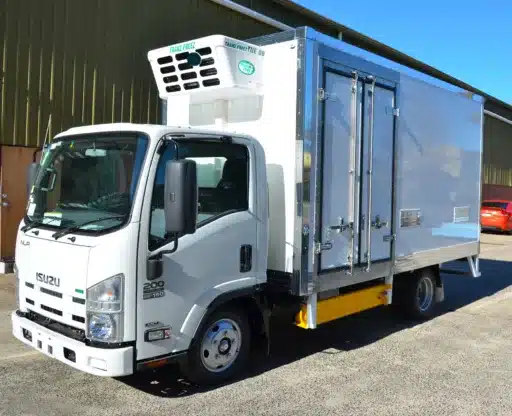
Two businesses can buy the same six-pallet truck and need completely different bodies on the back. A florist doing chilled, hand-loaded drops has little in common with a frozen food wholesaler moving pallets at -20 °C.
Your product and delivery pattern should shape the refrigerated truck body.
At Tranzfreeze, we’ve been making transport refrigeration here since 1989, and our Dandenong South team builds on Isuzu, Hino, Fuso, UD, Iveco and Mercedes chassis.
Key points
- Temperature, stop frequency, handling and cleaning decide how a body is built.
- Food runs depend on quick recovery between drops and easy-clean surfaces.
- Medicines need a tight temperature window and power for when the engine is off.
- Precise construction and a clear brief before quoting pay off in every industry.
Why does a refrigerated truck body change from one industry to the next?
Because the load sets the rules. Ice cream calls for heavier insulation than lettuce does. Short, frequent stops let outside air in at every door opening, while long hauls keep doors shut but test the walls.
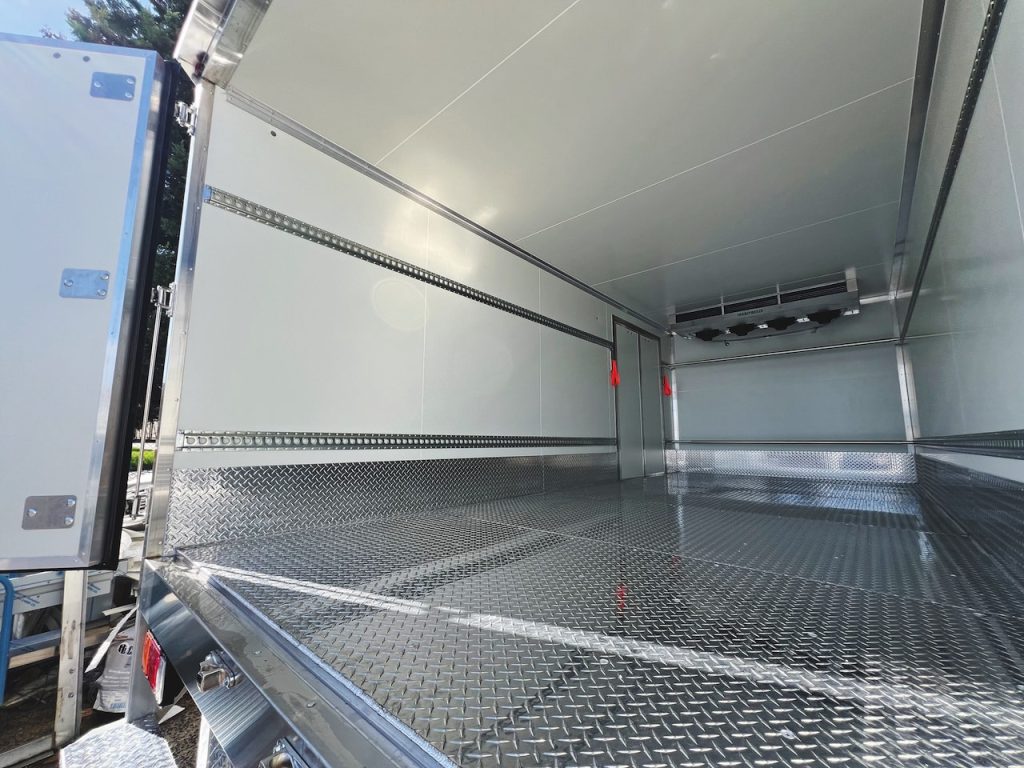
Handling matters too. Pallets, cartons, crates and hanging carcasses each call for a different floor, door arrangement and interior. Every truck refrigeration build we quote starts there, before a panel is cut.
How body design differs across five industries
Food distribution
Chilled bodies dominate Melbourne food rounds. Potentially hazardous food must travel at 5 °C or colder, as Food Standards Australia New Zealand explains. With frequent stops, what counts is how fast the unit gets back to set point after each drop. Plastic strip curtains can be added, and a fibreglass floor with drain holes makes hosing out simple.
Pharmaceuticals
Medical stock leaves far less margin for error. Much of it must stay between 2 °C and 8 °C from pick-up to drop-off. An in-cab readout keeps the driver informed without opening the doors. Parked overnight or loading before dawn, the unit can run off mains power through electric stand-by (240V or 415V).
Logistics and general freight
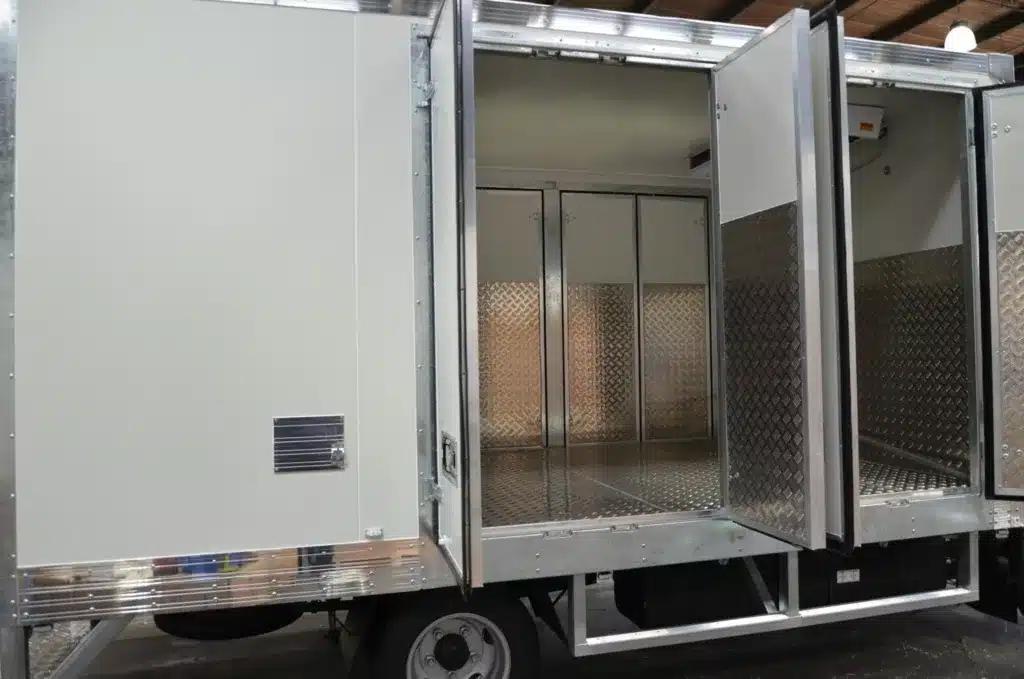
Freight fleets often carry several customers’ goods on one run. An insulated divider creates a frozen compartment up front and a chilled one behind it. A 1300 mm kerbside door saves climbing past the load for one order. Shoring bars keep a half-empty body tidy on the road.
Wholesale
Wholesale is about volume, and it nearly always arrives on pallets. Bodies go up to 14 pallets, with skates, strips or a checker plate floor to suit the way stock is moved. For frozen lines, a freezer truck body set for -18 °C to -25 °C needs thicker walls and a bigger unit. A fridge working 12-hour days also needs a tougher compressor than one off by mid-morning.
Specialty transport
Butchers often hang product rather than stack it, so meat hangers form part of the fit-out. Seafood suppliers generally choose frozen bodies, and a florist moving large volumes will quickly outgrow a light two-tonne body. Chemicals, medical samples and even live animals travel this way too, with custom racking built around each load.
What makes commercial refrigerated trucks last?
Build accuracy does most of the work. Our bodies are designed in CAD, with CNC-cut fibreglass panels and machine-folded stainless steel door frames, so seals meet evenly and walls stay tight. Each body’s serial number lets us reproduce a damaged door exactly. Some subframes even outlive their chassis.
Support matters too. One freezer customer’s Google review describes a faulty condensing unit replaced after a single phone call, and Trailer Magazine credited our team with around 140 years of combined experience.
Before you ask for a quote
Have these answers ready:
- ✓ What you carry and the temperature it needs
- ✓ Pallets, crates or cartons on a typical full load
- ✓ Stops per day and how long the fridge runs
- ✓ How goods are loaded and how often the body gets washed
- ✓ Whether stock stays on board overnight
Most builds take two to four weeks from measure-up to handover, and our optional extras handle the details once those answers are clear.
Call our team on 03 9706 4951 to get started.
Frequently Asked Questions
1. What is the difference between a chilled and a freezer truck body?
Chilled bodies typically hold +4 °C to +12 °C, which suits produce, dairy, and fresh meat. Freezer bodies sit at -18 °C to -25 °C and need heavier walls plus a more powerful unit.
2. Can one refrigerated truck body take chilled and frozen goods at once?
Yes. An insulated bulkhead divides the body into compartments, and each one gets its own evaporator so frozen and chilled lines ride together. Cafés and caterers often run this setup.
3. What temperature do pharmaceutical deliveries usually need?
Most cold chain medicines are kept at 2 °C to 8 °C. That range must hold for the whole journey, stops and loading included.
4. Which floor suits a truck that is washed down daily?
Daily hosing suits smooth fibreglass flooring with drainage holes or a tank. Fleets moving lots of pallets may lean towards skates or strips instead, so match the floor to how your team works.
5. Can a new body be fitted to a truck I already own?
Yes. Many of our builds go onto trucks owners already run or have just bought, and we remove any old body before fitting and commissioning the new one.