What do pull-down and recovery time mean in van refrigeration
May 22, 2026

If your refrigerated van spends the day opening, closing, stopping, and starting across Melbourne, the real question is not whether the unit can get cold. It is whether it can get down to temperature fast enough before the run starts, and then recover quickly enough to hold control once the route gets busy.
For businesses moving chilled meals, frozen goods, and boxed deliveries, that matters because food needs to stay under proper temperature control during transport. The Food Standards Australia New Zealand guidance on transporting food safely makes that clear, but on a busy delivery run, the practical challenge is how well your van setup handles repeated heat gain through the day.
That is where two performance terms matter, pull-down time and recovery time. They may sound like workshop language, but they are really route-planning terms. They tell you how a van refrigeration setup is likely to behave under the kind of pressure multi-drop delivery creates.
Key points
- Pull-down time is how long the system takes to bring the load space down to the set temperature.
- Recovery time is how quickly the temperature comes back after warm air enters, usually when the door opens.
- Frequent stops put more pressure on recovery than many operators expect.
- Ambient heat, load size, insulation, airflow, door openings, and unit capacity all affect performance.
- The best benchmark is one tied to your route, your load, and your target temperature, not a number on its own.
Pull-down time, in plain language
Pull-down time is the time it takes a refrigerated van to reach its target temperature after start-up or after loading. In real use, that means the system has to remove heat from the insulated body and from anything warm inside it.
For a business running morning deliveries, pull-down matters most before the first stop. If the van has been parked in the sun, if the load was not pre-cooled, or if the box is packed heavily from the start, the system may spend more time getting down to set point than you expect. That is why pull-down should never be viewed as just a unit spec. It is a whole-vehicle result shaped by the body, the load, the weather, and the way the van is used before the run even starts.
In simple terms, a van that pulls down well is one that gets ready for the route without wasting valuable time at the start of the day. For operators handling chilled meals, boxed food orders, or frozen goods, that matters because the first part of the run often sets the tone for the rest of it.
Recovery time, in plain language
Recovery time is how quickly the system returns to the set temperature after the door opens and warm air rushes in. On a single long run with minimal stops, recovery may not be the first thing you think about. On a multi-drop route, it can be the difference between stable temperatures and a box that spends too much of the day climbing and chasing.
That is why recovery matters so much for suburban meal delivery, frozen goods, and smaller boxed orders. Every door opening lets heat in. The more often that happens, the more often the refrigeration system has to pull the temperature back under control.
For many Melbourne operators, recovery is the more useful performance measure because it reflects what actually happens on the road. A van that performs well after repeated short door openings is usually better suited to metro delivery than one that looks strong in a best-case test but struggles once the route gets busy.
What affects pull-down and recovery time?
- Ambient heat: Hot weather increases the heat load on the van. In summer, the system has to work harder just to hold the same set point, especially if the vehicle is parked outside between runs.
- Load volume and product temperature: A lightly loaded van with pre-chilled stock will usually settle faster than a full van loaded with warmer goods. If the product goes in above the target transport temperature, the system has more work to do from the start.
- Insulation quality: Better insulation slows heat gain through the body. That is why the body build matters just as much as the refrigeration unit itself. Businesses comparing van refrigeration systems should look at the full package, not just the headline cooling figure.
- Door openings and seals: Every opening adds heat, and poor seals make the problem worse. Even a capable system can lose ground quickly if warm air keeps leaking in between stops.
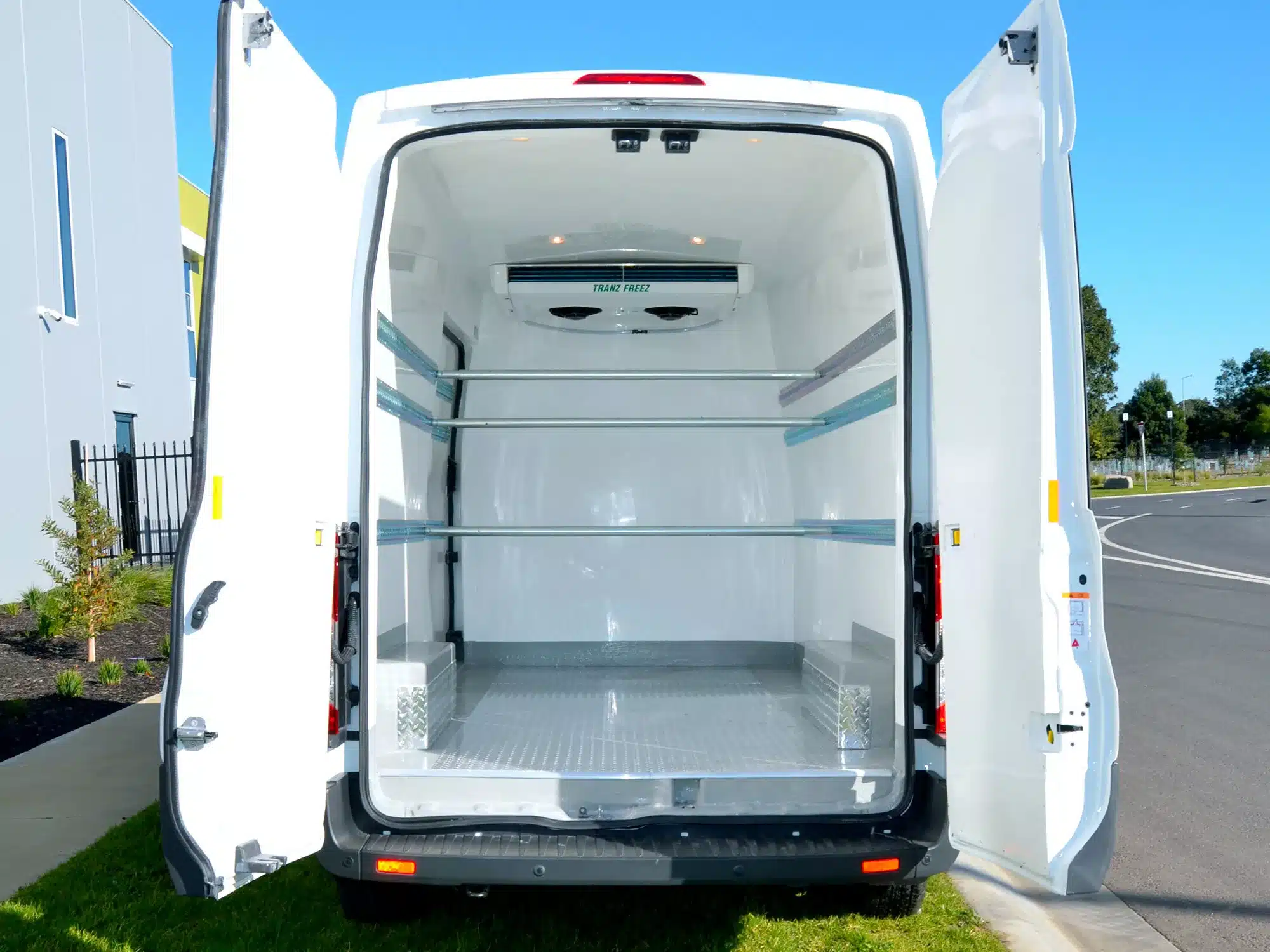
- Airflow inside the body: A strong unit still needs clear air circulation around the load. If boxed goods are stacked too tightly, pressed against outlets, or packed right to the roof, cool air cannot move properly through the body. That can lead to slow recovery and uneven temperatures across the load.
- Unit capacity and setup: Capacity has to match the job. A route with frozen stock, frequent door openings, and longer dwell times at each stop needs a different setup from a chilled-only run with fewer drops. This is where correct system sizing, evaporator layout, and vehicle fit-out start to matter.
Practical benchmarks to look for
Avoid judging a system by a single claim, such as fast cooling. A better benchmark spells out the conditions behind the result. Ask whether the quoted pull-down figure was based on an empty body or a loaded van, what the outside temperature was, what set point was used, and whether the goods were already at transport temperature.
For recovery, the most useful benchmark is one that reflects real route conditions. That might mean asking how the system performs after a short door opening, how it handles repeated suburban stops, or whether the performance changes between chilled and frozen work.
The key point is this: a benchmark only helps if it resembles your actual operating day. A number taken from ideal conditions may look impressive, but it will not tell you much about how the system behaves on a busy metro route with constant stops.
One common mistake operators make
A common mistake is treating van fridge performance as a single cooling number. In practice, a system can look strong on paper and still be the wrong fit for the job if the route includes frequent door openings, warm loading conditions, dense metro traffic, or mixed chilled and frozen work.
That is why it makes more sense to assess performance in context. For smaller-volume delivery businesses, the better question is not “How cold does it get?” but “How well does it hold up across my actual route?”
What this looks like on a real delivery route
Take a typical suburban run, a van leaves early with pre-packed chilled meals, makes eight to twelve stops across the morning, and the rear door opens for short periods at each drop. In that situation, a strong pull-down helps the van start the run ready, but recovery is what keeps temperatures controlled once warm air starts entering again and again.
Now compare that with a lower-stop frozen route carrying a denser load and spending longer parked during unloading. In that case, unit capacity, insulation quality, door seals, and airflow become even more important because the system has to manage both a colder target temperature and heavier heat gain each time the body is opened.
This is why the best setup is not always the one with the fastest claim on paper. It is the one configured for the way your route actually runs.
Questions to ask an installer
- What pull-down time should I expect for my set temperature and load type?
- What recovery behaviour should I expect after regular door openings on my route?
- Are those figures based on pre-cooled stock or warm product?
- What insulation, door seal, and airflow setup is included?
- Would an electric standby help my operation during loading, waiting, or overnight staging?
- How should the van be loaded so airflow is not blocked?
- What setup would best suit chilled, frozen, or mixed delivery work on my route?
These questions help move the conversation away from generic specs and towards real operating performance. That is where the right advice adds value, because the best refrigeration setup is the one matched to your route pattern, stop frequency, load size, and product type.
For Melbourne operators doing boxed, smaller-volume deliveries, the right answer is usually not the one with the biggest number on a brochure. It is the setup that suits the way your business actually runs. If you want a solution built around your delivery work, Tranzfreeze offers refrigeration installation services designed around vehicle type, temperature requirements, and day-to-day operating conditions.
FAQs
1. What is pull-down time in van refrigeration?
Pull-down time is the period a refrigerated van takes to reach its target set temperature after start-up or loading. The result depends on outside heat, how full the van is, how warm the goods are when loaded, and how well the body is insulated.
2. What is the recovery time in a refrigerated van?
Recovery time is how quickly the system brings the load space back towards the set point after the doors open and warm air enters. It is one of the most useful measures for stop-start delivery work because it reflects how the unit performs during the route, not just before it starts.
3. Why does recovery matter so much on multi-drop routes?
Frequent suburban and metro stops create repeated heat gain events through the day. If recovery is slow, the van can spend too much time above the target range between deliveries, especially on warmer days or heavily scheduled runs.
4. Does insulation affect refrigerated van cooling time?
Yes. Better insulation reduces the rate at which outside heat moves into the body through the floor, sides, and roof. That helps both pull-down and recovery by reducing how hard the refrigeration system has to work.
5. What should I ask before choosing a refrigerated van setup?
Ask about route type, number of stops, target temperature, product temperature at loading, insulation, airflow, door seals, and standby needs. The more closely the system is matched to your route and load, the better chance you have of getting reliable day-to-day performance.