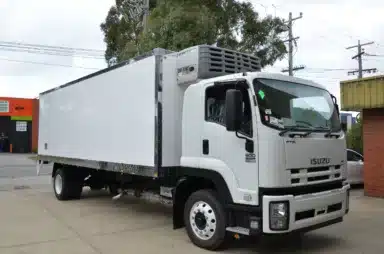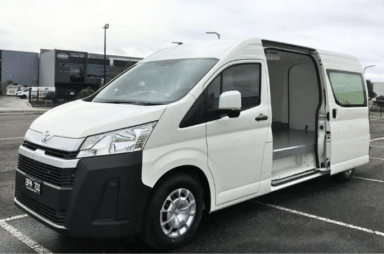
What Makes a Refrigerated Truck Body Suitable for Australian Delivery Conditions?
June 1, 2026

When you operate refrigerated trucks in Australia, the body has to do more than hold temperature in a controlled test environment. It has to perform in heat, traffic, loading docks, regional roads, and delivery routes where doors may open dozens of times a day.
At Tranzfreeze, we build refrigerated truck bodies for real commercial use. That means looking closely at the product being carried, the route, the delivery frequency, the required temperature, and the way the vehicle will be loaded.
For businesses moving food, flowers, chemicals, or other temperature-sensitive goods, the truck body plays a direct role in product protection, running costs, payload, hygiene, and long-term reliability.
Key Points
- Insulation choice should match the required temperature range and duty cycle.
- Door seals and access design are critical for frequent deliveries.
- Flooring and wall protection need to suit the load, not just the vehicle size.
- Payload must be balanced with insulation, body strength, and refrigeration performance.
- A custom-built refrigerated truck body can reduce long-term operating issues.
What We Look at Before Building a Refrigerated Truck Body
No two delivery operations are exactly the same. A frozen food distributor running long routes needs a different body from a florist delivering around Melbourne or a food service operator completing short, high-frequency drops.
Before recommending a refrigerated truck body, we look at:
- Product type – Food, flowers, chemicals, and frozen goods all have different transport requirements.
- Temperature range – The body should be designed for chilled, frozen, or multi-temperature transport.
- Delivery frequency – Frequent door openings place greater demand on insulation and refrigeration performance.
- Route type – Metro deliveries and regional routes create different operating conditions.
- Payload requirements – The body must support the required load without compromising efficiency.
- Access points – Door configuration affects loading speed and temperature retention.
- Custom fit-out requirements – Flooring, lighting, cargo tie-downs, wall protection, and temperature zones should suit your operation.
This early planning is where many long-term performance issues can be avoided.
Insulation Has to Match the Temperature Requirement
Insulation is one of the first things we assess because it affects almost every part of the vehicle’s performance.
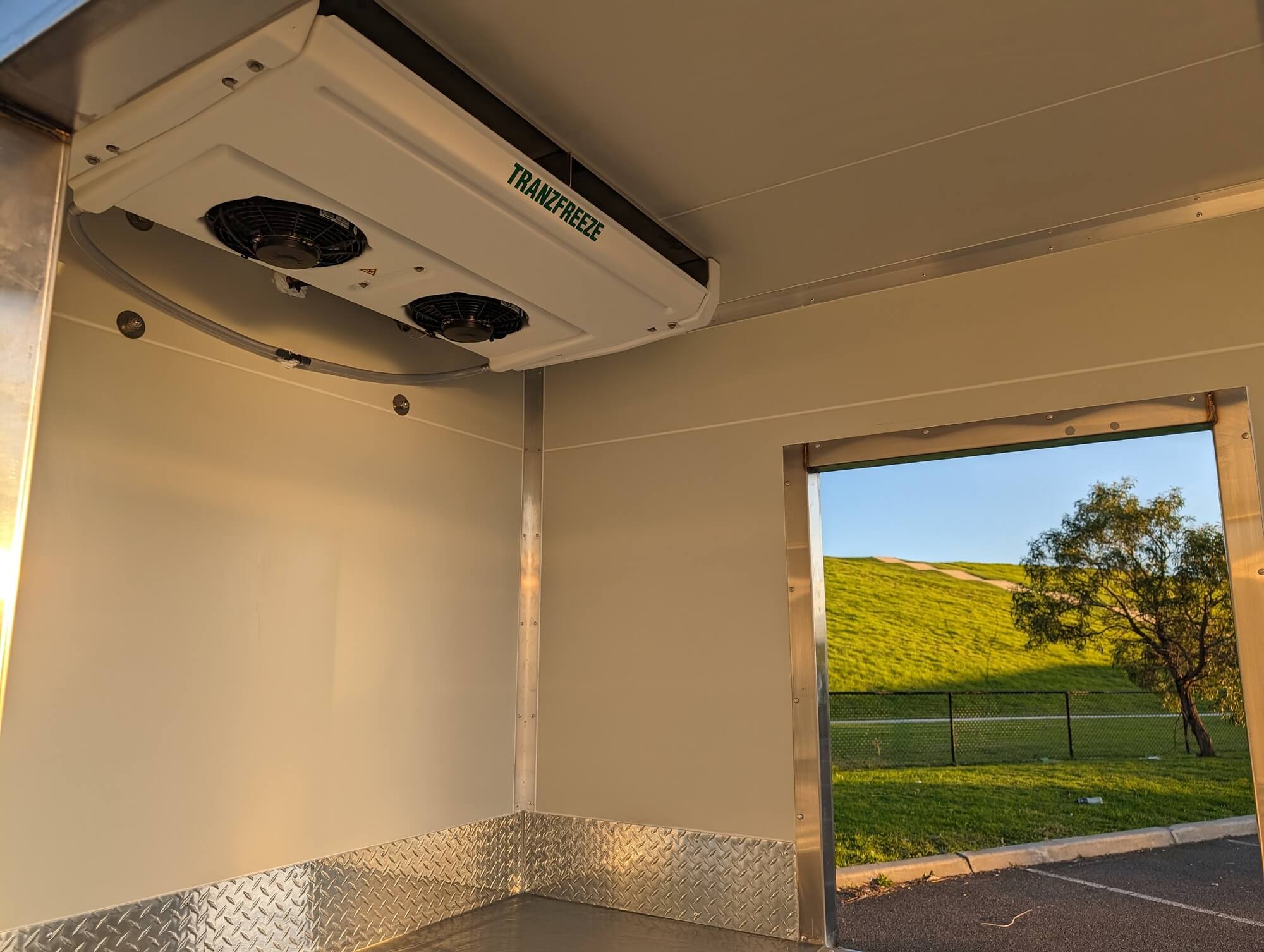
For temperatures below 0°C, we use high-density fibreglass panels. These are better suited to frozen applications where thermal performance, strength, and moisture resistance are critical.
For chilled applications from 0°C and above, softer insulated panels can be suitable, depending on the load, route, and delivery pattern.
Tranzfreeze refrigerated truck bodies can be configured for temperatures from -25°C to +18°C. The correct panel choice helps the refrigeration unit work within its proper range instead of fighting against poor body performance.
One of the issues we see with under-specified bodies is slow temperature recovery after deliveries. If the insulation is not suited to the job, the refrigeration unit works harder, fuel use can rise, and product temperature can become harder to control.
You can learn more about truck refrigeration solutions for commercial refrigerated transport.
Door Seals Matter More Than Many Buyers Expect
In high-frequency delivery work, door seals are one of the most important parts of the body.
Every door opening lets warm air enter. If seals are poor, damaged, or badly fitted, the refrigeration unit has to recover temperature again and again throughout the day.
For food service, floristry, and distribution fleets, this can create unnecessary strain on the system. Strong seals, accurate door fitment, and the right access layout help reduce temperature loss and keep deliveries moving.
Where needed, we can also configure multiple temperature zones so frozen and chilled products can travel in the same vehicle without compromising product requirements.
Flooring, Wall Protection, and Hygiene Should Match the Load
A refrigerated truck body is a working space. It needs to handle pallets, cages, trolleys, cleaning, and repeated loading without breaking down too early.
Flooring choice depends on how the truck will be used. Food operators may need easy-clean flooring and drainage. Chemical transport may require stronger protection and secure cargo tie-downs. Floristry operators may need stable chilled conditions with a fit-out that protects delicate stock.
Wall protection also matters. Without it, daily loading can damage internal panels, which can affect hygiene, appearance, and long-term body performance.
Food Standards Australia New Zealand advises that food transport vehicles should be designed and maintained to reduce contamination risk, which makes cleanable surfaces and sound body design important for food operators.
Durability Counts in Australian Conditions
A refrigerated truck body is a long-term commercial asset. It needs to cope with heat, road vibration, loading docks, kerbs, and daily commercial use.
This is where build quality and manufacturing tolerances matter. A body that looks acceptable at handover can still cause problems later if panels, seals, flooring, and fittings are not built to tight standards.
We focus on superior build quality, precise tolerances, and long-lasting components. These details help the body retain temperature, reduce wear, and support reliable daily operation.
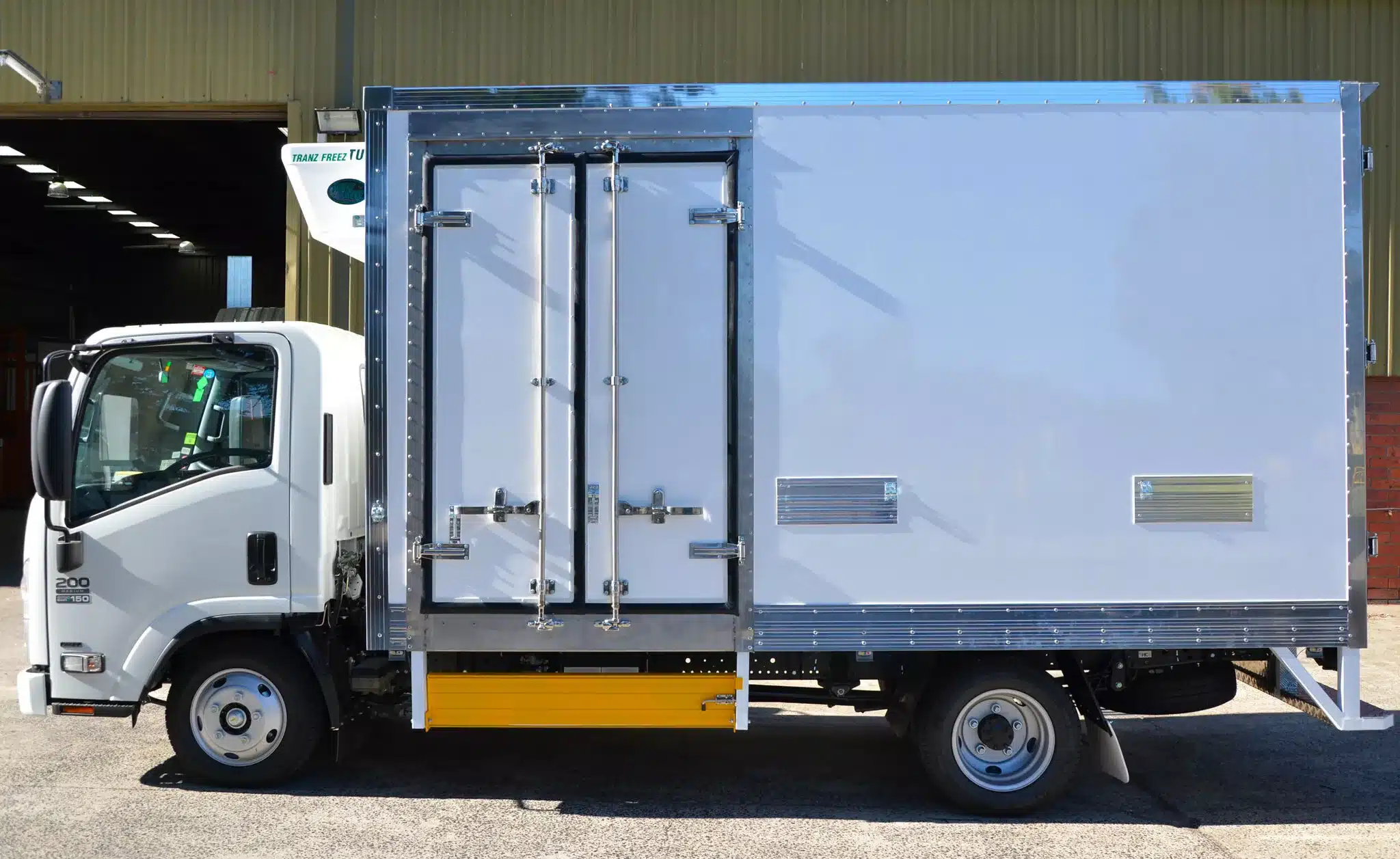
Our refrigerated truck bodies are available from 3 to 14 pallets, with options such as floor type, wall protection, cargo tie-downs, lighting, and multiple temperature zones.
Payload Needs to Be Planned Properly
Payload is not just about choosing the largest body available.
Insulation thickness, flooring, refrigeration equipment, body size, and internal fit-out all affect total vehicle weight. If these are not planned properly, a business can end up with less usable payload than expected.
We help customers balance carrying capacity, temperature performance, and daily delivery needs. For some operators, a 3-pallet body is the right fit. For others, a 14-pallet configuration may offer better efficiency across larger delivery runs.
The right body should support the way your fleet actually works, not just look suitable on paper.
Choosing a Refrigerated Truck Body for Long-Term Performance
If your business depends on reliable refrigerated transport, the right truck body can make a major difference to product protection, operating efficiency, and long-term running costs.
We design and build refrigerated truck bodies for Australian delivery conditions, with configurations tailored to your temperature range, delivery frequency, payload requirements, and industry needs.
Whether you operate in food transport, food service, floristry, or chemical distribution, our team can help you choose a refrigerated truck body built for dependable commercial performance.
Are you keen to discuss a custom refrigerated transport setup for your fleet?
Frequently Asked Questions
1. What temperature can a refrigerated truck body maintain?
A Tranzfreeze refrigerated truck body can be configured for temperatures from -25°C to +18°C, depending on the insulation, body design, and refrigeration system.
2. What insulation is best for frozen transport?
For below-zero transport, high-density fibreglass panels are better suited because they provide strong thermal performance, durability, and moisture resistance.
3. Why are door seals important on refrigerated trucks?
Door seals reduce warm air entering the body during deliveries. This helps protect temperature stability and reduces unnecessary strain on the refrigeration unit.
4. Can refrigerated truck bodies be customised?
Yes. Options include floor type, wall protection, cargo tie-downs, lighting, body size, access layout, and multiple temperature zones.
5. What size refrigerated truck body should I choose?
The right size depends on payload, route type, product temperature, and delivery volume. Tranzfreeze offers refrigerated truck bodies from 3 to 14 pallets.