How to size truck refrigeration for your route
May 19, 2026

Choosing truck refrigeration is not about buying the biggest unit available. For smaller-volume chilled and frozen deliveries, the better setup is the one that holds temperature through the day, recovers well after door openings, and suits the way the truck actually works.
If you deliver pre-packaged meals, chilled cartons, or frozen boxed goods around Melbourne, refrigeration sizing should be based on the route, not just the body length. The real question is how much heat enters the body during a run, and how quickly the unit needs to pull temperature back down. That is why route length, stop frequency, target temperature, product type, box size, insulation thickness, and ambient conditions all matter when you size a truck refrigeration system.
Key points
- Size the unit to the daily route load, not just the truck body.
- Multi-drop work often needs stronger recovery performance than longer runs with fewer stops.
- Bigger is not always better, because added capacity can increase cost, wear, and fuel or energy use.
- Extra capacity can make sense in hot weather, frequent-stop work, and mixed-load applications.
- Insulation, airflow, and body design matter as much as the refrigeration unit itself.
Start with the job, not the brochure
A good sizing decision begins with how the truck is used on a normal day. Tranzfreeze notes that refrigerated vehicle choice should reflect distance travelled, product type, payload, and operating pattern. That same thinking should guide refrigeration capacity.
In practical terms, the unit is dealing with heat load, not just cargo volume. Warm air enters when the doors open. Heat passes through the roof, floor, and walls. Poor load layout can restrict airflow. Frozen work at about -18°C creates a different demand from chilled work at about 4°C. Under Australian food safety guidance, cold food should be kept at 5°C or colder during transport, and frozen food should stay frozen, so the unit needs enough capacity to hold that range through the whole route.
A practical sizing framework
1. Set the target temperature first
Start with the temperature you need to hold. Chilled, frozen, and mixed-temperature work are different jobs. Tranzfreeze explains that below-zero bodies need different panel construction from chiller bodies, which shows that refrigeration capacity cannot be separated from body design.
2. Match the body to the usual load
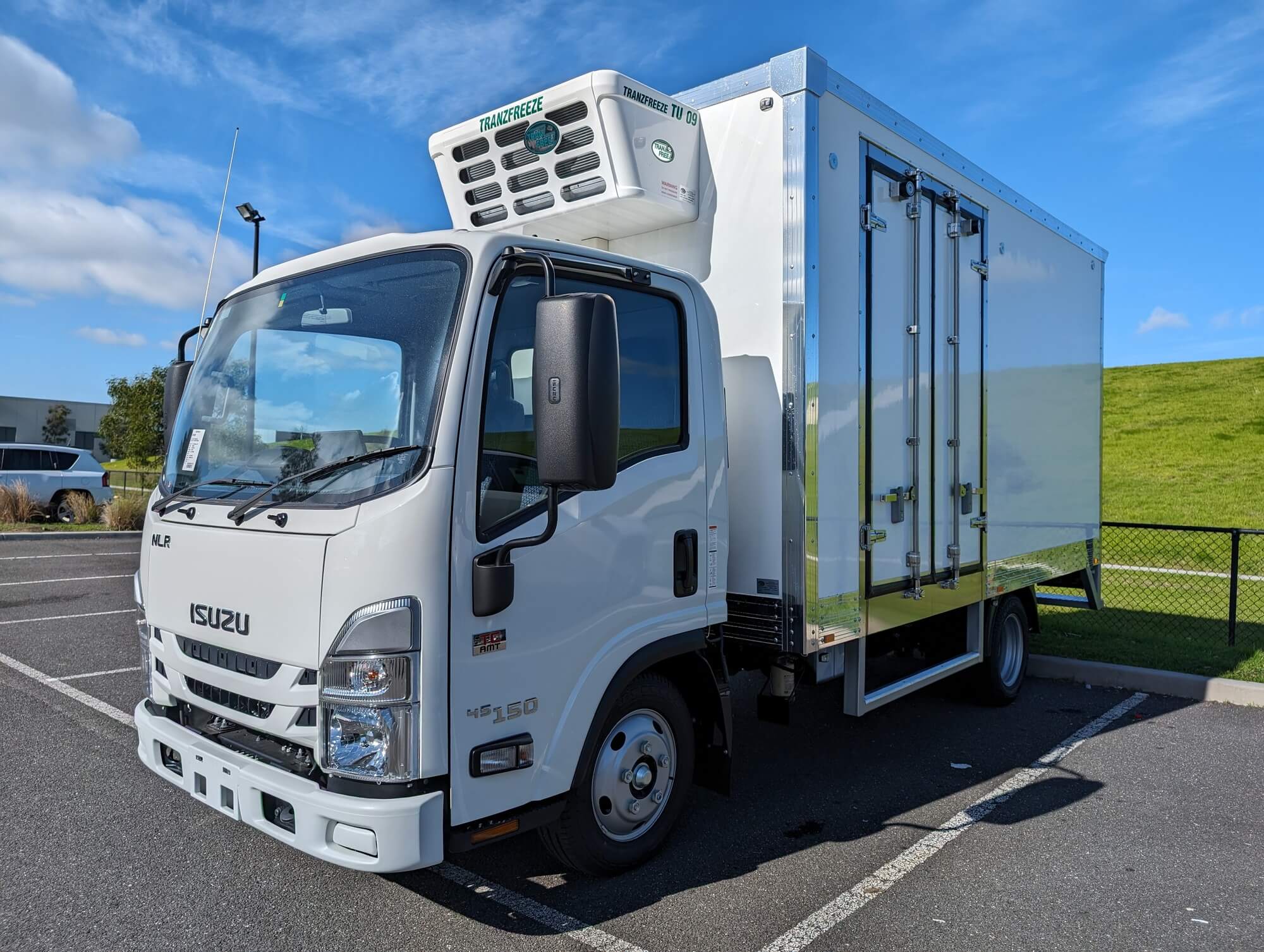
A common mistake is sizing the body for the biggest day of the year instead of the normal week. Empty air still has to be cooled. If the truck runs half full most days, an oversized body can make the system work harder than necessary. Tranzfreeze offers solutions from single-pallet ute bodies through to larger rigid truck bodies, with setups for about -25°C to +18°C, which is a useful reminder that the body and the refrigeration unit should be planned together.
3. Count door openings as part of the load
For many Melbourne operators, door openings are one of the biggest factors in refrigeration performance. A short suburban run with 15 or 20 drops can place more demand on the system than a longer route with only a few openings, because warm air enters the body every time the doors open and the unit then has to recover temperature before the next stop.
This is where Tranzfreeze’s practical approach matters. Rather than sizing a unit on body length alone, the system needs to reflect how often the truck stops, how quickly deliveries are made, and how much temperature recovery is needed across the day. For multi-drop route refrigeration, that real-world operating pattern is often just as important as the box size itself.
4. Check insulation before adding more capacity
Insulation should be treated as part of the refrigeration system, not as a separate detail. Tranzfreeze explains that below-zero bodies need different panel construction from chiller bodies, which is why the right result comes from matching the unit and the body build together.
For operators carrying chilled or frozen boxed goods, that makes a real difference. When insulation, airflow, and refrigeration output are properly aligned, the system is better placed to hold temperature consistently from the first delivery to the last. It is one of the reasons Tranzfreeze focuses on tailored transport refrigeration solutions rather than a one-size-fits-all setup.
5. Allow for Melbourne conditions
Melbourne does not always give you mild operating conditions. The Bureau of Meteorology lists a mean maximum of 26.7°C at Melbourne Airport in January, but the same station recorded a 44.4°C maximum on 31 January 2026. A unit that looks fine on a mild morning may be working much harder in traffic on a hot afternoon.
Why the right fit delivers better results
The best refrigeration setup is the one that matches the route, the product, and the body build. For smaller boxed deliveries, that usually means choosing a system that holds temperature reliably, recovers well after stops, and runs efficiently across the normal working day.
A right-fit approach also helps you get more from the full vehicle setup. When body size, insulation, airflow, access pattern, and refrigeration output are planned together, the system is easier to operate and better suited to consistent day-to-day performance. That is especially important for chilled and frozen delivery work where temperature control needs to stay dependable from the first drop to the last.
This is where an experienced supplier adds real value. Tranzfreeze designs and installs transport refrigeration systems around the practical demands of the job, helping operators match refrigeration capacity to route conditions, product requirements, and vehicle layout rather than relying on a one-size-fits-all approach.
When extra capacity is justified
Extra capacity does have a place. It can make sense when the truck works through summer heat, when the route involves repeated door openings, or when the load changes through the week. It can also help with mixed loads or multi-compartment bodies. Where the operating pattern is more complex, it is worth looking at a setup that can be configured and installed around the job, rather than relying on a simple box-length rule.
Two common route profiles
Metro multi-drop
Think of a truck delivering pre-packaged meals across Melbourne’s inner and middle suburbs. The kilometres may be modest, but the refrigeration load is not. The driver is in and out of the body, the doors open repeatedly, the truck sits in traffic, and the load gradually reduces during the run. In this profile, fast recovery matters. A right-sized body, solid insulation, tidy airflow around boxed freight, and a sensible capacity margin are usually more useful than choosing the biggest available unit.
Regional linehaul
Now think of a truck running from Melbourne to a regional centre with only a few drops. The route may involve more hours and more distance, but fewer door openings and steadier running conditions. In that setting, holding temperature efficiently over time often matters more than rapid pull-down after every stop.
Quote-readiness checklist
Before you request pricing, have these details ready:
- product type, chilled, frozen, or mixed
- target temperature range
- internal box length, width, and height
- usual daily load, cartons, cages, or cubic volume
- busiest-day number of drops
- route type, metro multi-drop or regional linehaul
- typical operating hours
- ambient conditions, especially summer exposure
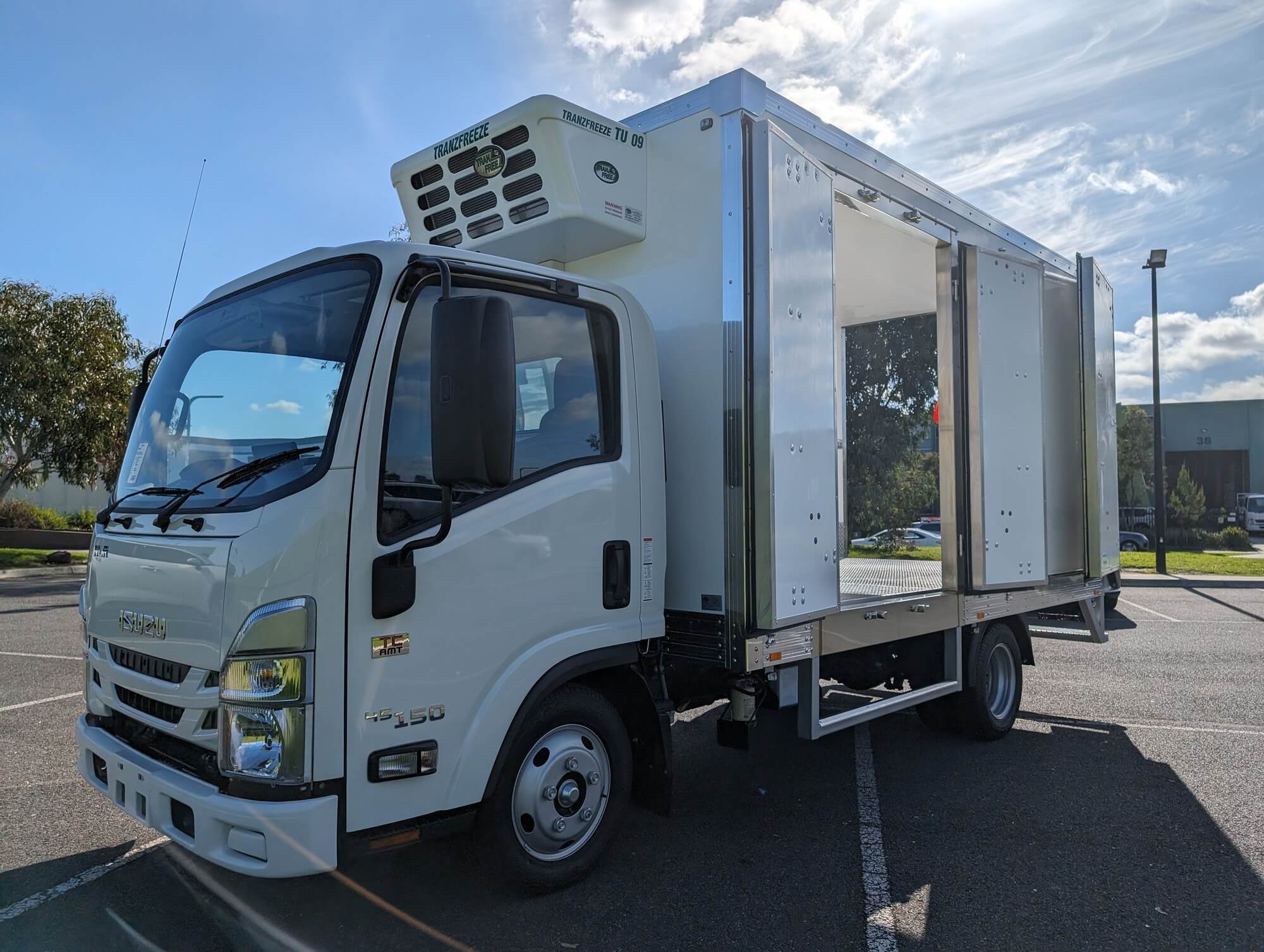
- door configuration and access pattern
- whether you need standby power or multiple compartments
A simple next step
If you have worked through the points above and want to sense-check your setup, Tranzfreeze can look at your route, product type, target temperature, and body size, then help you work out a practical refrigeration configuration for the job. You can start by reviewing their truck refrigeration solutions or gathering the details below before requesting advice.
FAQs
1. What is the best starting point for truck refrigeration sizing?
Start with the route and the product. Distance, drop count, target temperature, and body size tell you far more than a model chart on its own.
2. How do I size a reefer unit for a multi-drop route?
Look closely at door openings, dwell time, and how quickly the unit must recover once the doors close. On suburban work, recovery demand can shape the sizing decision as much as the total kilometres.
Does frozen work always need more refrigeration capacity than chilled work?
In many cases, yes. Lower target temperatures and different body construction usually mean a higher refrigeration demand.
4. Can insulation thickness reduce the refrigeration capacity I need?
Better insulation reduces heat gain into the body, which helps temperature hold and recovery. It does not replace correct sizing, but it can change what the system needs to work against.
5. What should I prepare before asking for a quote?
Have the route details ready, including product type, target temperature, body dimensions, busiest-day drop count, normal daily load, and whether the truck is doing metro multi-drop or regional work.