What Van Temperature Monitoring Options Work Best?
July 20, 2026

Most refrigerated van operators only think about van temperature monitoring after something has already gone wrong: a driver glances at the dash mid-run, or a customer flags stock that arrived warmer than it should have. By then, the damage is done.
There are several ways to keep a closer eye on the load space, from a simple in-cab readout through to full live monitoring. The right choice depends less on the technology and more on what you carry, how many stops you make, and what you need to prove if a customer or auditor asks.
Key points
- Van refrigeration units typically show return air temperature at the unit itself, not the temperature where the product actually sits.
- Basic controllers, wireless probes, data loggers and telematics each answer a different question about your load.
- Sensor placement and calibration affect accuracy as much as the technology you choose.
- The right system depends on load type, stop frequency and how long you need to keep records for.
Why Monitoring Matters Beyond the Dash Display
Under Standard 3.2.2 of the Food Standards Code, potentially hazardous food needs to stay at 5°C or colder, or 60°C or hotter, while being transported (FSANZ). That sounds simple until you consider that a refrigerated van unit’s built-in display usually reports the air returning to the evaporator, not the temperature deep inside a packed load. On a short single-drop run, that gap rarely matters. On a busy metro route with doors opening all morning, it can decide whether a delivery is properly accounted for.
Comparing the Main Monitoring Options
- Basic display controllers are built into most refrigeration units and show a live cab reading. They suit short, low-risk runs, but they record nothing, so there is no record to show a customer or auditor afterwards.
- Wireless temperature probes sit inside the load space itself, closer to the product than the unit’s own sensor. They suit businesses wanting a truer read of what the goods are experiencing, particularly in vans carrying mixed loads or multiple compartments.
- Data loggers record readings at set intervals and store them for download later, creating a timestamped history rather than a single reading. They are the standard tool for food safety documentation.
- Telematics and live monitoring combine temperature with location, door-open events and alerts, all viewable in real time. This suits fleets with active compliance obligations, high-value cargo, or enough stops that a driver cannot check the display each time.
Sensor Placement, Calibration and Data Retention
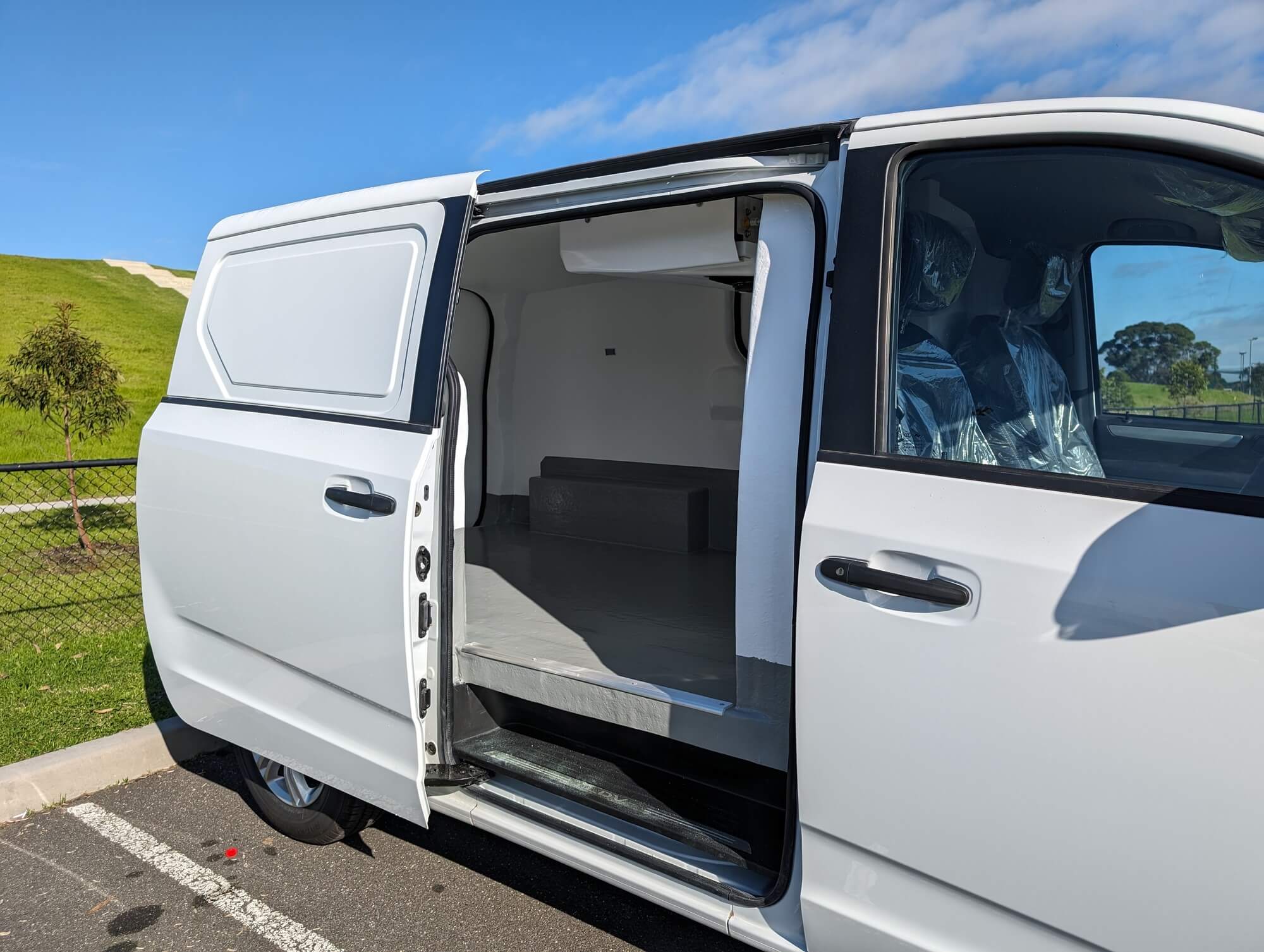
Where a probe sits changes what it tells you. A sensor near the door reads warmer than one placed mid-load, simply because that is where warm air gets in first. It is a common cause of false alarms in fitted vans, usually solved by moving the sensor rather than replacing it. For an accurate picture, probes are best positioned away from door seals and airflow outlets, ideally at product level rather than up near the roof.
Calibration matters just as much as placement. A sensor that has drifted even slightly can under-report or over-report for weeks before anyone notices, so checking calibration at regular intervals, and again after servicing, keeps readings trustworthy.
How long you keep records for usually comes down to your food safety program or your customers’ requirements, but many businesses hold logged data for at least the product’s shelf life, plus a buffer in case a query comes up later.
Choosing by Industry and Fleet Size
A single-van operator doing local chilled deliveries on a stable route may only need a reliable wireless probe and occasional manual checks. A fleet running mixed chilled and frozen loads, or supplying pharmaceuticals, faces higher exposure if something goes wrong, and a logger or full telematics setup earns its keep quickly.
Match the system to your actual operation rather than choosing on spec sheet alone.
If you want a monitoring setup built around your route, load type, and reporting needs, Tranzfreeze can fit it as part of your van refrigeration system rather than as an afterthought.
Contact us to talk through what would suit your fleet.
FAQs
1. What is the difference between a data logger and telematics?
A data logger records temperature at set intervals for later download, suiting food safety documentation. Telematics does the same in real time, adding location and door-open alerts so you can respond while still on the road.
2. Do I need a wireless probe if my van already has a display?
The unit’s display usually shows return air temperature, not the temperature where the product sits. A wireless probe placed in the load space gives a more accurate picture, particularly for mixed or multi-compartment loads.
3. How often should temperature sensors be calibrated?
There is no single fixed rule, but checking calibration at regular scheduled intervals, and again after servicing, is standard practice. Sensors can drift gradually, so periodic checks catch problems early.
4. Where should a temperature probe be placed in a refrigerated van?
Away from door seals and airflow outlets, closer to product level than the roof. Placement near a door tends to read warmer simply because that is where outside air gets in first.
5. How long should I keep temperature records for?
This depends on your food safety program and customer requirements, but many businesses retain records for at least the shelf life of the product, plus a margin in case a question comes up later.